




Serrated Grating
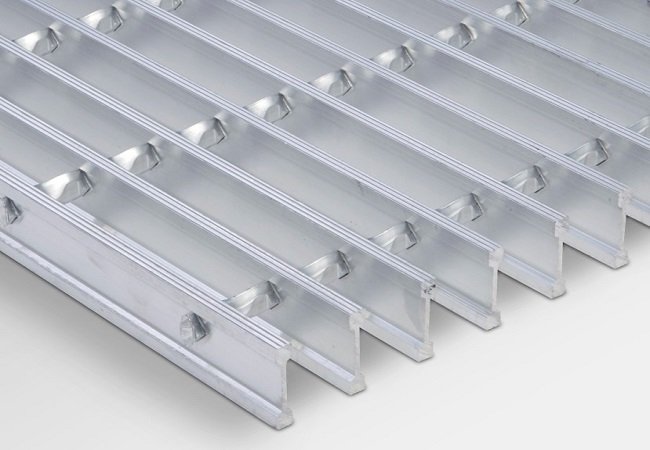
Serrated grating is bar grating whose bearing bars carry a notched, saw-tooth profile on the top surface, mechanically gripping shoe soles to reduce slip risk in wet, oily, icy or sloped conditions. Available in carbon steel, stainless steel 304/316 and aluminum, with hot-dip galvanizing to ASTM A123 for corrosion protection.
Serrated Grating Quick Specs
| Parameter | Range |
|---|---|
| Material | Carbon Steel (Q235 / ASTM A36) / Stainless Steel 304/316 / Aluminum 6063-T5 |
| Surface | Serrated (notched top edge, ~3 mm teeth at 60°) |
| Bearing Bar Size | 20×3 mm – 100×10 mm (25×5 mm and 50×5 mm most common) |
| Bearing Bar Pitch | 30 mm (max slip resistance) / 40 mm (lighter duty) |
| Cross Bar Pitch | 50 mm / 100 mm |
| Panel Size | Standard 1200×3000 mm, custom up to 1500×6000 mm |
| Slip Resistance | DIN 51130 R11 (27° > slope > 19°) |
| Finish | Mill / Hot-Dip Galvanized (65–120 µm, 85+ µm standard) / Untreated |
Serrated Grating Specifications
| Bearing Bar Size | Bearing Bar Pitch | Cross Bar Pitch | Weight (kg/m²) | DIN 51130 Rating | Typical Application |
|---|---|---|---|---|---|
| 20×3 mm | 30 mm | 50 mm | ~12.5 | R10 | Light walkway, drainage cover |
| 25×5 mm | 30 mm | 50 mm | ~18.2 | R11 | Walkway, stair tread, platform |
| 30×5 mm | 30 mm | 50 mm | ~21.0 | R11 | Stair tread, oily process area |
| 40×5 mm | 40 mm | 100 mm | ~23.5 | R11 | Platform, ramp |
| 50×5 mm | 40 mm | 100 mm | ~28.8 | R11 | Heavy walkway, marine deck |
| 60×5 mm | 40 mm | 100 mm | ~33.6 | R11 | Heavy-duty platform |
| 80×8 mm | 40 mm | 100 mm | ~58.0 | R11 | Heavy vehicle area, dock |
| 100×10 mm | 40 mm | 100 mm | ~88.5 | R11 | Maximum load, port, bridge |
Custom bearing bar sizes, pitch and panel dimensions available. Serration reduces the effective bearing bar depth by approximately 3 mm; load capacity is confirmed against your actual span and uniform load before production. DIN 51130 ratings are verified by third-party test on request.
Serrated vs. Plain Grating
Plain grating has flat bar tops and is easier to clean, lower in cost, and smoother for rolling loads. Serrated grating adds a toothed top edge that mechanically grips footwear when water, oil, mud or slope increases slip risk. Serration does not increase structural load capacity — bar size, spacing and span determine that. The choice is about operating conditions, not strength.
| Factor | Plain Grating | Serrated Grating |
|---|---|---|
| Surface Traction | Flat top, dry/clean areas | Toothed edge for wet, oily, icy, sloped |
| Cost | Lower (economical default) | Moderate premium on bearing bars |
| Cleaning | Easiest — flat edges shed debris | Teeth hold dirt slightly more |
| Load Capacity Basis | Same bar section, same rating method | Same bar section, same rating method |
| Best Environment | Dry indoor platforms, mezzanines | Outdoor walkways, stair treads, ramps, marine, oily zones |
| DIN 51130 Rating | Typically R10 or lower | Typically R11 for 25×5 mm and above |
Many project specifications mandate serrated surfaces for outdoor walkways, stair treads and marine/offshore areas. Mixed designs are common: serrated on circulation routes and stairs, plain on equipment zones. Specify the surface type per area on the layout drawing so fabrication and pricing match each zone.
Applications
Stair Treads & Ramps
OSHA 1910.24 requires slip-resistant stair treads for industrial stairways. Serrated bearing bars with 25×5 mm or 30×5 mm at 30 mm spacing are standard for stair treads in factories, warehouses and power plants. A solid bar nosing of 10 mm thickness is recommended for heavy-duty areas.
Walkways & Platforms
Outdoor walkways, offshore platforms, loading docks and catwalks where rain, oil or process spillage creates continuous slip risk.
Marine & Offshore
Salt spray, wave splash and wet decks make serrated surfaces mandatory on offshore platforms and marine access ways. Stainless steel 316 or hot-dip galvanized carbon steel is the standard material choice.
Wastewater & Process Plants
Serrated grating is specified for wastewater treatment plants, chemical process areas and any zone with wash-down, oil or grease accumulation.
Quality & Supply
DIN 51130 Slip Rating Verification — Serrated panels can be supplied with third-party DIN 51130 test reports on request. R11 rating is standard for 25×5 mm and above at 30 mm pitch.
Serration Depth Control — Teeth are approximately 3 mm high at 60°, punched before assembly. Bearing bar effective depth after serration is recorded on the inspection sheet.
Galvanizing After Fabrication — Hot-dip galvanizing to ASTM A123 / EN ISO 1461 is performed after cutting, notching and welding, so every cut edge and weld is zinc-coated.
Load & Span Support — Bearing bar selection is confirmed against your actual span and uniform load, accounting for the reduction in effective depth from serration.
Related Products



FAQ
Serrated Grating — FAQ
What does DIN 51130 R11 mean?
DIN 51130 is a European slip resistance test for inclined surfaces. R11 corresponds to a slope angle between 19° and 27° where a person can stand without slipping under contaminated conditions (oil, water). Serrated grating with 25×5 mm bearing bars at 30 mm pitch typically achieves R11.
Does serration reduce load capacity?
Serration removes a small amount of material from the top edge of each bearing bar — approximately 3 mm. Load capacity should be calculated using the remaining effective depth. For critical spans, we confirm the required bearing bar size against your span and uniform load before production.
Can I mix serrated and plain grating in one order?
Yes. Mixed designs are common: serrated on circulation routes, stairs and ramps; plain on equipment zones, mezzanines and areas with rolling loads. Specify the surface type per area on the layout drawing so fabrication and pricing match each zone.
Is serrated grating required by OSHA for stair treads?
OSHA 1910.24(f) requires stair treads to have a slip-resistant surface. Serrated grating is the standard solution for industrial stairways. The specific requirement depends on your project and local codes — confirm before ordering.
What is the typical lead time for serrated grating?
Standard panels in stock specification ship in 7–15 days. Custom cut-to-size orders with banding, notching and drilling typically require 15–25 days after drawing approval.

Need a Serrated Grating Specification?
Send your material, bearing bar size, pitch, panel dimensions, and the environment (wet, oily, sloped, marine). We will confirm the serrated specification and DIN 51130 rating against your requirements, and reply with a factory quotation within 24 hours.