



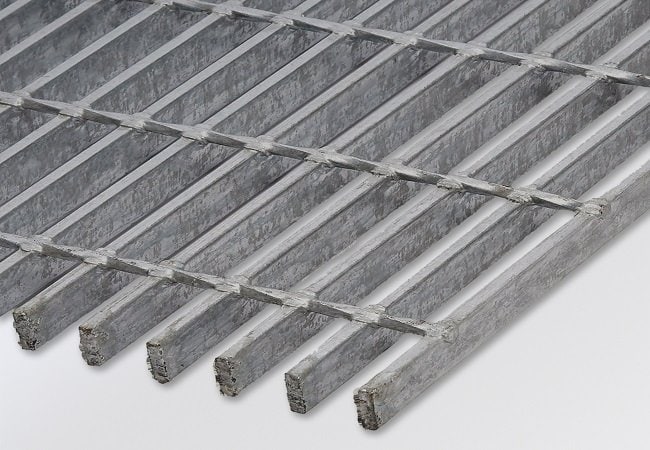
Steel Grating
Steel grating is the most widely specified open-grid flooring material in the world, manufactured by assembling high-strength steel bearing bars and cross rods into a rigid, load-bearing panel. It is the industry standard for industrial walkways, operating platforms, trench covers, and stair treads due to its unbeatable strength-to-cost ratio.
Why Choose Steel Grating
While alternative materials like aluminum and FRP exist, steel grating remains the dominant choice for industrial applications due to its unique combination of properties:
Exceptional Load Capacity: Steel provides the highest structural strength and rigidity, easily supporting heavy pedestrian traffic, forklifts, and vehicular loads without excessive deflection.
Cost-Effective for Large Projects: Carbon steel is the most economical base material, making it the preferred choice for large-scale industrial facilities and commercial projects.
Versatile Corrosion Protection: When fabricated from carbon steel, hot-dip galvanizing after fabrication ensures long-term durability in outdoor and wet environments. For extreme corrosion, stainless steel grades (304/316) offer inherent rust resistance.
High Impact Resistance: Unlike brittle materials, steel grating can withstand heavy impacts from dropped tools, machinery, or vehicle tires without shattering or cracking.
Fire Resistant & Non-Combustible: Steel will not burn or emit toxic smoke, making it compliant with strict international fire safety codes for industrial and public infrastructure.
Construction Types
Welded Steel Grating
Bearing bars and cross bars are resistance-welded at every intersection. It is the strongest, most common, and most economical construction, suitable for heavy-duty platforms and industrial floors.
Press-Locked Steel Grating
Cross bars are hydraulically pressed into slotted bearing bars without welding. It offers a clean, smooth appearance and high lateral rigidity, preferred for architectural screens and visible public areas.
Swage-Locked Steel Grating
Cross rods are swaged into bearing bars, sitting slightly below the top surface. This creates a smooth surface ideal for close-mesh (ADA compliant) applications and wheeled traffic.
Heavy-Duty Riveted Steel Grating
Cross bars are riveted to deep bearing bars. This construction resists vibration and impact fatigue, making it the required choice for bridge decks, airport inlets, and heavy vehicle loading. Read more about Heavy Duty Grating.
Steel Grating Applications
Because of its high strength and versatility, steel grating is deployed across almost every heavy industry and infrastructure sector:
Industrial Platforms & Mezzanines: Factory floors, equipment maintenance platforms, and walkways.
Drainage & Trench Covers: Municipal drainage grates, industrial trench covers, and sump covers.
Stair Treads & Ladders: Anti-slip stair treads for factories, warehouses, and power plants.
Security & Fencing: Machine guards, security partitions, and ventilation grilles.
Infrastructure: Bridge decking, airport trench drains, and port terminal flooring.
Related Products



FAQ
Steel Grating — FAQ
What is the difference between steel grating and aluminum grating?
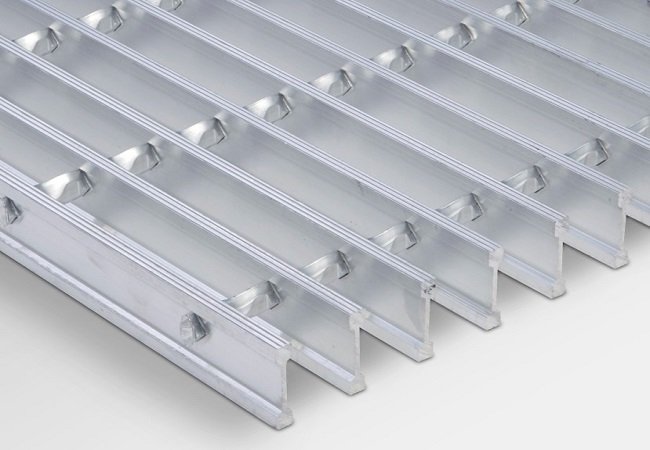
Steel grating (especially carbon steel) offers higher strength and load capacity at a lower cost, making it ideal for heavy industrial platforms. Aluminum grating weighs about one-third as much as steel and offers natural corrosion resistance, making it better suited for architectural applications and rooftop installations where dead load is a concern.
Which steel material is best for outdoor use?
Hot-dip galvanized carbon steel is the most common and economical choice for outdoor use, providing decades of rust protection. For highly corrosive environments like coastal areas, marine docks, or chemical plants, stainless steel 304 or 316 is recommended.
What is the standard spacing for steel bar grating?
The most common standard is 19-W-4, which means the bearing bars are spaced 1-3/16″ on center and the cross bars are spaced 4″ on center. This spacing is designed for general pedestrian walkways and industrial platforms.
Can steel grating support vehicles?
Yes, but standard 1″ or 1-1/4″ pedestrian grating is not sufficient. You must specify heavy-duty grating with deeper bearing bars (e.g., 3″ to 7″) and heavier cross bars, verified against AASHTO H-15, H-20, or H-25 vehicle load tables.
How do I prevent steel grating from slipping?
You can specify serrated (notched) bearing bars instead of plain flat bars. Serrated steel grating is highly recommended for stair treads, ramps, and any wet or oily environment.

Need a Custom Steel Grating Specification?
Whether you need mild steel, hot-dip galvanized, or stainless steel, our factory-direct team can supply standard panels or custom cut-to-size grating. Send your material, bearing bar size, spacing, and application environment, and we will reply with a factory quotation within 24 hours.