




Perforated Metal Products
Xiongqian perforated metal products are manufactured using high‑precision stamping or CNC punching equipment, producing round, square, slotted, hexagonal, and custom patterns.
We stock a wide range of thicknesses (0.3mm–12mm), hole shapes, and metal materials (stainless steel, aluminum, carbon steel, copper, galvanized, etc.), and offer custom punching and deep‑processing services.
Whether for industrial filtration, architectural facades, or safety guards, Xiongqian perforated metal meets your application requirements.
Perforated Metal Hole Patterns
Xiongqian offers a wide range of perforated hole patterns including round, square, slotted, hexagonal, anti-skid, and custom designs – each with specific advantages in strength, open area, airflow, or drainage.
For detailed technical specifications and application guidance, please visit our perforated metal resource center.

Round hole perforated mesh is the most common and versatile pattern, manufactured by punching precise round holes into metal sheets.
It offers excellent balance between open area and structural strength, making it ideal for filtration, screening, acoustic panels, and architectural cladding.Read more about round hole perforated mesh.
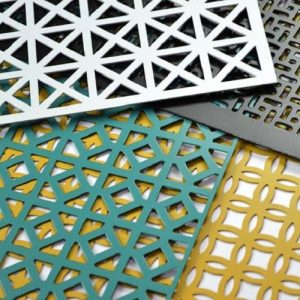
Decorative perforated mesh features custom patterns (flowers, logos, geometric shapes) created by CNC punching or laser cutting.
It transforms ordinary metal into artistic screens for building facades, interior partitions, and luxury elevator interiors.
Read more about decorative perforated mesh.

Anti-skid plate, also known as raised perforated metal, is produced by punching and then forming a raised pattern (e.g., dimple or louver) on the sheet surface.
It provides excellent traction for walkways, ramps, stair treads, and industrial platforms, reducing slip accidents in wet or oily conditions. Read more about anti-skid plate.
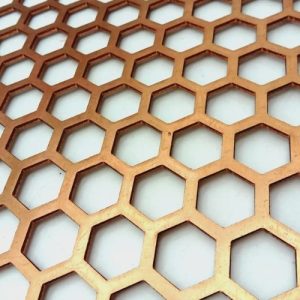
Hexagonal perforated mesh features six‑sided holes arranged in a honeycomb pattern, providing superior strength‑to‑weight ratio and a modern aesthetic.
Common applications include speaker grilles, ventilation screens, and architectural metal ceilings. Read more about hexagonal perforated mesh.

Square hole perforated mesh is punched with clean, straight‑sided square openings.
It allows maximum light and air passage while maintaining flatness, making it suitable for security window screens, sorting sieves, and furniture panels. Read more about square hole perforated mesh.
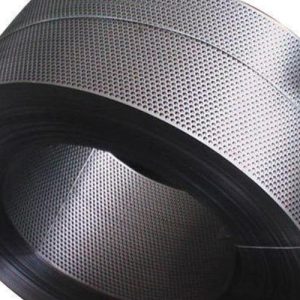
Coil perforated mesh is manufactured from metal coils fed through a rotary punching press, producing continuous lengths of perforated sheet rolled into coils.
This format is ideal for high‑volume applications like automotive filter media, ventilation strips, and conveyor belt covers. Read more about coil perforated mesh.

Long round hole (slotted) perforated mesh is punched with elongated holes, offering higher open area for airflow or drainage compared to round holes.
It is widely used in grain cleaning screens, vibrating separators, and noise reduction panels where directional flow is required. Read more about long round hole perforated mesh.
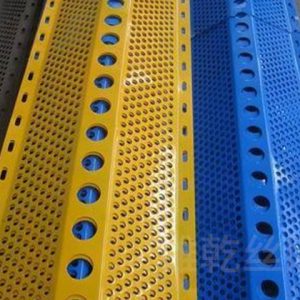
Flexible windproof and dust suppression net is woven from high‑density polyethylene or polyester yarns, engineered with specific open area and air resistance.
It is used for coal yards, bulk material storage, ports, and open‑pit mining – reducing wind speed and controlling dust dispersion. Read more about flexible windproof and dust suppression net.
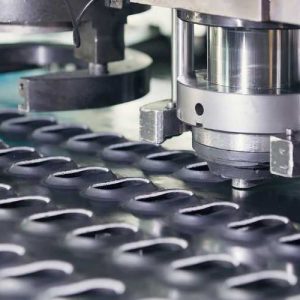
Perforated metal deep processing products refer to finished components made from perforated sheets through additional steps: bending, welding, stamping, edging, and surface finishing.
Examples include filter baskets, machine guards, speaker grilles, and custom enclosures ready for installation. Read more about perforated metal deep processing products.
Perforated Metal Benefits
Perforated metal sheets offer a unique combination of strength, open area, and design flexibility, making them the preferred material for industrial and architectural applications. Here are the key benefits of Xiongqian perforated metal
High strength with reduced weight: The perforation process removes material while maintaining structural integrity, resulting in significantly lighter panels than solid sheets. This lowers shipping and installation costs.
Precise open area and aperture sizes: Apertures from 0.1mm to 100mm and open areas between 10%–80% meet demanding requirements for filtration, screening, ventilation, and noise control.
Excellent airflow and light transmission: Uniformly spaced holes allow air and light to pass freely, ideal for building facades, sunshades, ceilings, and equipment guards.
Anti‑slip and safety performance: Anti‑skid plates (raised or patterned) provide superior traction for industrial walkways, stair treads, and vehicle platforms, reducing slip hazards.
Corrosion resistance and long service life: Available in stainless steel, galvanized steel, aluminum, and other materials, with powder coating or polyurethane edging for harsh, wet, or outdoor environments.
Fully customizable: CNC punching supports round, square, slotted, hexagonal, and any custom pattern. Secondary processes like bending, welding, and stamping deliver ready‑to‑install components.
Choose Xiongqian perforated metal to achieve optimal performance and cost efficiency.


Applications for Perforated Metal Sheets
Perforated metal sheets, with their unique hole structures, high strength-to-weight ratio, and custom izability, are widely used across global industries.
- Industrial Filtration & Separation
- Building Facades & Solar Shading
- Mining & Quarry Screening
- Industrial Safety & Equipment Guards
- Agricultural Processing & Livestock Farming
- HVAC & Ventilation
- Acoustic Panels & Noise Control
- Food & Beverage Processing
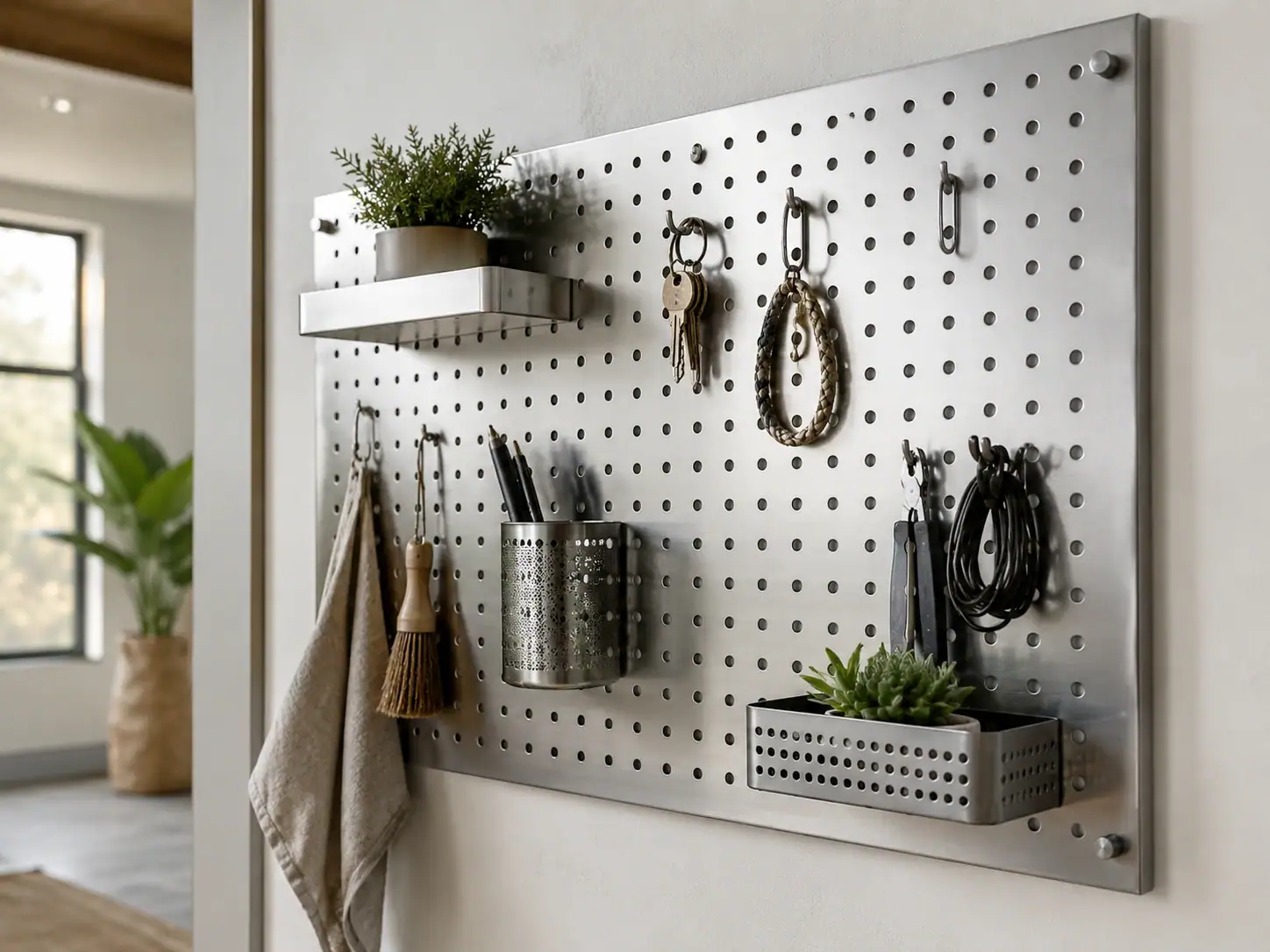
Perforated Metal Grades
Xiongqian Can Meet Your Perforated Metal Product Needs
As a professional perforated metal and wire mesh manufacturer, Xiongqian serves industrial and architectural clients worldwide with a wide range of material options. Our extensive stock includes:
Specialty Nickel Alloys: We custom-punch any industrial alloy you need including Inconel perforated metal, Hastelloy perforated metal, Alloy 20, and Monel perforated metal ideal for high‑temperature and highly corrosive environments.
Carbon Perforated Metal: Available in various grades such as A36, 1018 Mild Steel, 1144 Stress‑proof equivalent, 12L14 Free Machining, A366/1008 Alloy, A513 Alloy, and 8620 Alloy offering high strength and cost‑effectiveness.
Stainless Steel Perforated Metal: Grades including 304, 316L, 430, and 201 with chromium content above 10.5% provide outstanding corrosion resistance. Perfect for food, pharmaceutical, chemical, and outdoor applications.
Galvanized Perforated Metal: Hot‑dip or electro‑galvanized coating delivers excellent rust protection. Cost‑effective and reliable for humid, rainy, and general industrial environments.
Aluminum Perforated Metal: Stocked in 3003, 5052, 6061‑T6, and 6063 – lightweight, corrosion‑resistant, and easy to fabricate. Widely used in architectural cladding, electronic heat sinks, and transportation components.
Ornamental Perforated Metal: Custom patterns (floral, geometric, logos) allow easy shaping for decorative applications – ideal for artistic screens, ceilings, and furniture design.
Architectural Perforated Metal: Designed for architects, engineers, and design professionals – combines aesthetics with structural performance for facades, sunshades, railings, and space dividers.
You can purchase one sheet or coil of perforated metal, or thousands of finished components – whatever your company requires. Our stock perforated metal is available with round, square, or slotted perforations and in various thicknesses (0.3mm–12mm). We also offer custom perforated accessories and deep‑processing services for your special needs.
Frequently Asked Questions About Perforated Metal
What are some commonly used material grades for perforated metal sheets?
Xiongqian offers a wide range of material grades:
- Stainless steel (304, 316L, 430, 201),
- Carbon steel (A36, 1018, 1144, 12L14, A366/1008, A513, 8620),
- Aluminum (3003, 5052, 6061-T6, 6063),
- Galvanized steel,
- Specialty nickel alloys (Inconel, Hastelloy, Monel, Alloy 20).
Each grade is selected for specific strength, corrosion resistance, and fabrication requirements.
How do I choose the right perforated plate material for my project?
Selecting the right material depends on three factors: operating environment (humidity, corrosion, high temperature), mechanical strength (load, impact resistance), and budget.
For example: outdoor architecture → 316L stainless steel or aluminum; highly corrosive chemical environments → Hastelloy; general industrial guards → galvanized or carbon steel.
Xiongqian provides free technical selection support.
What are the differences between 304 and 316L stainless steel perforated sheets?
304 stainless steel is the most common austenitic grade, resisting most oxidizing media – ideal for food, pharmaceutical, and general outdoor use.
316L contains molybdenum (Mo), offering superior resistance to chlorides (seawater, salt spray, acidic solutions) and has lower carbon content to prevent intergranular corrosion after welding. For coastal or chemical applications, 316L is recommended.
Which is more suitable for outdoor use: galvanized perforated sheet or aluminum perforated sheet?
Both are suitable for outdoor use but with different strengths: Galvanized perforated metal is more cost-effective, with a zinc coating providing good rust protection for general humid environments (railings, guards).
Aluminum perforated metal is lightweight, naturally corrosion-resistant (no coating needed), and easy to form into complex shapes – ideal for architectural facades, sunshades, and aesthetic applications. For high-salt environments (coastal), aluminum or 316L stainless steel is better.
Can Xiongqian provide perforated plates in small batches or with special grades?
Yes. Xiongqian supports sample orders as low as 1 sheet and accepts special grades such as Inconel, Hastelloy, Monel, etc. Standard stock thickness ranges from 0.3mm to 12mm, maximum width 2000mm, length unlimited.
We can also perform deep processing (bending, welding, stamping) to deliver finished components per your drawings.
How can I obtain the material certificate or test report for Xiongqian perforated plates?
All Xiongqian perforated metal can be supplied with material test certificates (MTC, compliant with EN 10204 3.1 or 3.2) and third-party inspection reports (e.g., SGS, TÜV).
We can also provide hardness tests, salt spray tests, or spectrographic analysis upon request. Please specify your required certifications when requesting a quote, and we will provide the documents within 48 hours.