



Introduction

Anyone who has spent time on a construction site knows one fundamental truth about concrete: it handles compression well, but tension is a different story. Without reinforcement, concrete cracks under load. For decades, the standard solution has been loose reinforcing bars—cut, placed, and tied by hand on site.
Today, however, an increasing number of projects are turning to welded wire mesh as the preferred reinforcement method.
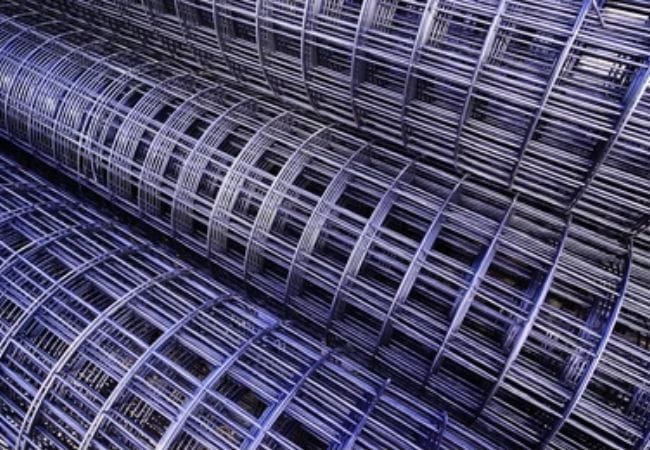
Welded wire mesh also known as welded wire fabric or WWR (welded wire reinforcement),is a prefabricated grid of longitudinal and transverse steel wires electrically welded at every intersection. It arrives on site as a ready-to-place mat, eliminating much of the labor associated with traditional reinforcement. The global welded wire reinforcement market was estimated at USD 15.5–25.5 billion in 2025, with the welded wire reinforcement product segment alone valued at USD 4.05 billion in 2025 and projected to reach USD 5.61 billion by 2032. These figures reflect a clear industry shift.
So why has welded wire mesh become so widely adopted in construction? The answer lies in several distinct advantages that address the core challenges of modern building projects: labor efficiency, quality control, material strength, and crack prevention.
Time-Saving Installation
One of the most compelling arguments for welded wire mesh is the time it saves on site. Traditional rebar reinforcement requires workers to cut individual bars, position them, and tie each intersection with wire—a painstaking, labor-intensive process that can stretch over days for large slabs.
Welded wire mesh changes this entirely. As a prefabricated product, it arrives as large mats that can cover significant areas in a single placement. The need to tie individual bars is greatly reduced or eliminated entirely. The rigid welded intersections create a stable mat that stays in place during concrete pours, unlike loose bars that can shift.
The numbers speak for themselves. Projects using welded wire mesh reinforcement can be up to 20% faster than those specifying traditional rebar. Slab reinforcement with welded wire mesh is reported to be four to eleven times faster than with rebar. Placing costs for welded wire reinforcement are typically in the range of 9 to 15 cents per square foot—savings of over 50% compared to rebar tying and placing costs. For contractors working on tight schedules, this efficiency is invaluable.

Consistent Quality and Easier Inspection
Quality control is another area where welded wire mesh outperforms traditional methods. Hand-tied rebar is subject to human error—spacing can vary, ties can be loose, and bars can shift during the pour. Welded wire mesh, by contrast, is manufactured using automated machinery with stringent tolerances on wire spacing and size.
This consistency makes inspection faster and more reliable. Instead of checking every tie and measuring every bar spacing individually, inspection engineers can quickly review the prefabricated mesh mats. The uniformity of welded wire mesh reduces the time spent on inspection acceptance before concrete pours, accelerating the overall construction schedule
Higher Yield Strength and Material Efficiency
Welded wire mesh is made from cold-drawn steel wires that offer a higher yield strength than standard Grade 400 rebar. This higher strength allows engineers to use less steel to achieve the same design resistance—a benefit that translates into material savings and reduced embodied carbon.
Structural welded wire reinforcement can achieve yield strengths up to 550 MPa (80 Ksi), compared to 400 MPa (60 Ksi) for standard rebar. In precast concrete applications, steel content can be reduced by as much as 27% when using engineered structural mesh. This material efficiency not only lowers costs but also aligns with growing sustainability requirements in the construction industry.
Key Construction Applications
Welded wire mesh serves a broad spectrum of construction applications, from residential foundations to major infrastructure projects.
Residential Construction
In residential projects, welded wire mesh is commonly used for driveways, sidewalks, basement floors, and slab-on-grade applications. It provides effective crack control at a lower installed cost than traditional rebar, making it the go-to choice for residential contractors.
Commercial and Industrial Buildings
For commercial and industrial projects—warehouses, manufacturing facilities, parking structures, and institutional buildings—welded wire mesh serves as primary reinforcement in slabs, walls, and foundations. Engineered Structural Mesh (ESM) products provide cost-effective alternatives to conventional rebar reinforcement while delivering consistent quality and faster installation.
Infrastructure and Heavy Civil
Roadways, bridge decks, tunnel liners, and airport runways rely on welded wire mesh for durable, long-lasting reinforcement. Welded wire reinforcement conforms to standards such as ASTM A1064 for mat designation, wire grade, and weld shear strength. In precast concrete applications—culverts, box structures, and three-sided spans—engineered structural mesh accelerates installation and reduces steel requirements.
Fencing and Security Barriers
Beyond concrete reinforcement, welded wire mesh is widely used for fencing and security applications. Highway medians, rail corridors, substations, and perimeter fencing all utilize welded mesh panels for their strength and durability. The rigid structure and corrosion-resistant coatings make welded mesh fencing ideal for both temporary construction barriers and permanent security installations.
How to Choose the Right Welded Wire Mesh
Selecting the appropriate welded wire mesh for a project depends on several factors. Here are key considerations:
Wire spacing and gauge: Smaller spacing provides better crack control but increases material weight. Common spacings include 4×4, 6×6, and 8×8 inches. Wire gauge determines strength—heavier gauges for structural applications, lighter gauges for crack control.
Coating: For outdoor or corrosive environments, galvanized or PVC-coated welded wire mesh offers superior corrosion resistance. Stainless steel welded mesh is available for highly corrosive or architectural applications.
Panel vs. roll: Flat sheets (panels) provide rigidity for slab and wall reinforcement. Rolls offer flexibility for fencing and curved applications.
Standards compliance: Ensure the mesh meets relevant standards—ASTM A1064 in North America, BS 4483/Eurocode 2 in the UK/EU, or AS/NZS 4671 in Australia/New Zealand.
Conclusion
Welded wire mesh has earned its place as a cornerstone of modern construction. Its advantages—faster installation, consistent quality, higher yield strength, and superior crack control—address the practical challenges that contractors and engineers face on every project. From residential driveways to major infrastructure, welded wire mesh delivers reliable performance at a competitive cost.
The market continues to grow, with the welded wire reinforcement product segment projected to expand at a CAGR of 4.78% through 2032. For construction professionals and material specifiers, understanding the benefits and applications of welded wire mesh is essential for making informed, cost-effective decisions.
Xiongqian offers a comprehensive range of welded wire mesh products for construction applications, available in various wire gauges, spacings, and coatings to meet project-specific requirements.
