



Introduction
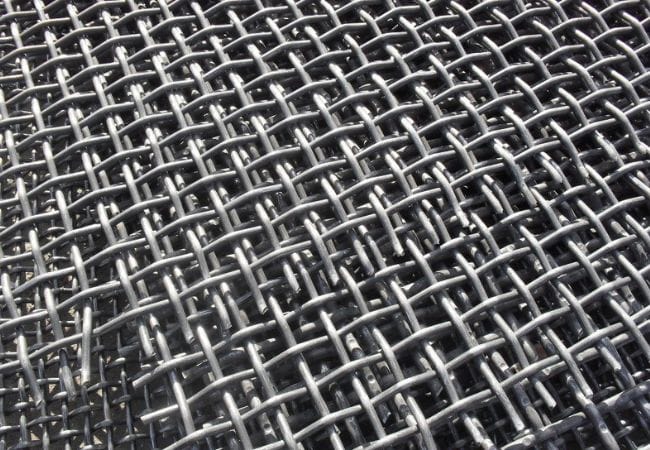
When selecting wire mesh for industrial, commercial, or architectural applications, one of the first and most important decisions you will face is choosing between fine wire mesh and coarse wire mesh.
This choice directly affects filtration efficiency, airflow, structural strength, and overall performance. Yet many buyers struggle to determine which category best suits their needs.
The distinction between fine and coarse mesh is not arbitrary—it is defined by mesh count, which refers to the number of openings per linear inch.
When the mesh count is above 80, it is called fine wire mesh; when it is below 80, it is called coarse wire mesh. Understanding this fundamental difference and the practical implications it carries—is essential for making the right specification decision.
What Is Mesh Count?
Mesh count is the number of openings (or holes) in one linear inch of wire mesh. For example:
10 mesh = 10 openings per inch
40 mesh = 40 openings per inch
100 mesh = 100 openings per inch
As mesh count increases, the openings become smaller. A higher mesh number means finer filtration but reduced airflow and visibility. A lower mesh number means larger openings, better airflow, and greater structural strength.
It is important to note that mesh count alone does not fully define the opening size. Wire diameter also plays a critical role: even with the same mesh count, a thicker wire will produce a smaller opening. This is why engineers must evaluate both mesh count and wire diameter together when reviewing wire mesh specifications.

Fine Wire Mesh: Characteristics and Applications
Fine wire mesh typically refers to wire mesh with a mesh count above 80. It features small openings, fine wire diameters, and high precision. The apertures in fine wire mesh generally range from 20 to 160 microns.
Common mesh counts for fine wire mesh include 50 x 50, 60 x 60, 80 x 80, and 100 x 100. For ultra-fine applications, counts can reach 400 mesh or higher.
Key Characteristics of Fine Wire Mesh
High filtration precision: Capable of retaining very small particles, down to micron-level sizes
Higher resistance to flow: Smaller openings create more resistance to airflow or liquid flow
Lower visibility: Dense weave makes the mesh less transparent
Greater open area variability: Open area depends heavily on wire diameter
Common Applications
Fine wire mesh is widely employed across industries where precision separation is critical
Industrial filtration: Chemical processing, pharmaceutical production, and liquid filtration
Food and beverage: Powder screening, flour sifting, and beverage filtration
Electronics and semiconductors: Precise porosity for component manufacturing
Laboratory sieving: Particle size analysis and testing
Medical and pharmaceutical: Sterile filtration and device components
When to Choose Fine Wire Mesh
Choose fine wire mesh when your application requires:
Retention of small particles (under 200 microns)
High filtration efficiency
Precision separation and classification
Laboratory or analytical accuracy
Coarse Wire Mesh: Characteristics and Applications
Coarse wire mesh refers to wire mesh with a mesh count below 80. It features larger openings, thicker wire diameters, and greater structural strength. The apertures in coarse wire mesh typically range from 1 mm to 12 mm or more.
Common mesh counts for coarse wire mesh include 2 x 2, 4 x 4, 6 x 6, 8 x 8, and 10 x 10
Key Characteristics of Coarse Wire Mesh
High structural strength: Thicker wires provide greater load-bearing capacity
Excellent airflow and visibility: Large openings allow free passage of air and light
Lower filtration precision: Designed for large-particle separation
Greater durability: Resists wear and impact in demanding environments
Common Applications
Coarse wire mesh is used in applications where strength and airflow take priority over fine filtration
Security and fencing: Animal enclosures, security barriers, and machine guards
Construction and reinforcement: Concrete reinforcement and foundation support
Mining and aggregates: Particle sizing and bulk separation
Agricultural: Livestock enclosures and grain storage
Industrial screening: Heavy-duty screening and grading
When to Choose Coarse Wire Mesh
Choose coarse wire mesh when your application requires:
High structural strength and durability
Maximum airflow and visibility
Separation of large particles (over 1 mm)
Protection and containment rather than precision filtration
Fine Mesh vs Coarse Mesh: Key Differences at a Glance
| Feature | Fine Wire Mesh | Coarse Wire Mesh |
|---|---|---|
| Mesh count | Above 80 | Below 80 |
| Opening size | 20–160 microns | 1 mm – 12 mm+ |
| Filtration precision | High (micron-level) | Low (millimeter-level) |
| Airflow | Restricted | Excellent |
| Structural strength | Moderate | High |
| Visibility | Low | High |
| Typical applications | Filtration, pharmaceuticals, chemicals | Fencing, construction, mining |
Welded Wire Mesh: A Special Consideration
When discussing fine wire mesh and coarse wire mesh, it is important to distinguish between woven wire mesh and welded wire mesh. While both are types of wire mesh, they are manufactured differently and have distinct characteristics.
Woven wire mesh is produced by interlacing warp and weft wires, similar to textile weaving. It offers high precision, a wide mesh count range (from coarse to ultra-fine), and is flexible and rollable. This makes woven wire mesh the preferred choice for filtration and sieving applications where precision is paramount.
Welded wire mesh, on the other hand, is made by resistance welding wires at their intersections. It features a rigid structure, strong load capacity, and is ideal for fencing, panels, guards, and reinforcement. Unlike woven mesh, welded wire mesh does not unravel when cut, making it more durable for structural applications.
When choosing between woven and welded options within the fine or coarse categories, consider:
Precision requirements → Woven mesh offers finer and more precise openings
Structural needs → Welded mesh provides greater rigidity and load capacity
Cut edge behavior → Welded mesh does not unravel; woven mesh may require edge sealing
Flexibility → Woven mesh can be rolled; welded mesh is supplied in panels
Selecting between fine wire mesh and coarse wire mesh, and between woven and welded constructions—requires a systematic approach. Follow these steps to make the right decision:
Step 1: Define Your Primary Function
Step 2: Determine Particle Size or Opening Requirement
Step 3: Evaluate Airflow and Pressure Drop
Step 4: Consider Structural Requirements
Step 5: Assess Environmental Conditions
Step 6: Review Cost and Availability
Common Mistakes to Avoid
Choosing mesh count only: Always consider wire diameter as well. Two meshes with the same count can have different opening sizes.
Ignoring open area: Open area affects airflow, visibility, and filtration efficiency.
Over-specifying filtration requirements: Using excessively fine mesh increases cost and reduces efficiency unnecessarily.
Not considering material type: Environmental conditions should drive material selection.
Confusing mesh count with opening size: These are related but not identical.
Conclusion
Choosing between fine wire mesh and coarse wire mesh is not a matter of one being “better” than the other—it is about selecting the right tool for the right job. Fine wire mesh excels in precision filtration, particle separation, and applications requiring micron-level accuracy. Coarse wire mesh dominates in structural applications, security, construction, and scenarios where strength and airflow are paramount.
For applications requiring structural rigidity and load-bearing capacity, welded wire mesh offers advantages over woven alternatives, particularly in fencing, panels, and reinforcement. For precision filtration and sieving, woven wire mesh remains the preferred choice.
By carefully evaluating your particle size requirements, airflow needs, structural demands, and environmental conditions, you can confidently select the optimal wire mesh for your project. Xiongqian offers a comprehensive range of both fine wire mesh and coarse wire mesh products, including woven and welded wire mesh options, with custom specifications available to meet your unique requirements.
