



What Is Slotted Perforated Metal
Slotted perforated metal is a type of perforated sheet featuring elongated holes rather than round or square openings. These slots can have either round ends (often called “obround” slots) or square ends (rectangular holes), offering diverse ways to pattern and use the panels. Unlike round holes that provide uniform flow in all directions, slotted perforated metal creates directional flow patterns that can be customized to specific applications.
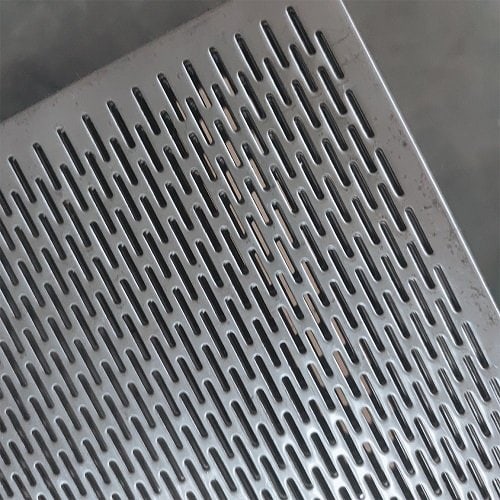
The manufacturing process uses advanced punch presses or laser capabilities to create the elongated openings. Slotted perforated metal can be produced in a wide range of materials, including stainless steel, aluminum, carbon steel, galvanized steel, copper, and brass. The slotted hole sheet offers unique advantages for applications requiring directional flow, high open area, and efficient material sorting.
Key Performance Features
Slotted perforated metal offers several distinctive performance advantages that make it the preferred choice for specialized applications.
Directional Flow Control
The most significant feature of slotted perforated metal is its ability to direct flow in a specific direction. This directional control is invaluable in applications such as grain cleaning, where elongated slots can be oriented to match the flow of materials. The slotted perforated panel allows air, liquid, and materials to pass through efficiently while maintaining precise control over direction.
High Open Area
Slotted holes can achieve very high open area percentages – often exceeding what is possible with round holes of equivalent width. The elongated shape allows for tighter nesting of openings, maximizing the percentage of the sheet that is open space. Open area rates for slotted perforated metal typically range from 23% to 49%, with some configurations reaching 85% open area.
Enhanced Material Flow
The elongated openings of slotted perforated metal are ideal for sorting, sieving, and filtration, ensuring efficient separation of materials. The slot shape is particularly effective for processing similarly shaped materials like seeds and grains. The directional nature of slots allows materials to flow through with minimal obstruction, reducing the risk of clogging and improving throughput.
Optimized Airflow and Drying
Slotted perforated metal facilitates ventilation and moisture control in processing applications. The elongated openings allow air to circulate efficiently, making slotted sheets ideal for drying floors, malting floors, and other applications where moisture removal is critical.
Structural Integrity
Despite the high open area, slotted perforated metal maintains excellent structural integrity. It is designed specifically for materials and airflow to pass through without making the metal less reliable and sturdy. The slot pattern type is very flexible and can be formed into unique shapes.
Slot Orientation and Patterns
The orientation and arrangement of slots are critical factors that determine the performance of slotted perforated metal. Unlike round holes, slots have a long dimension and a short dimension, creating directional properties that can be harnessed for specific applications.
Slot Orientation
The long dimension of the slots can be furnished with either the width or length of the sheet in most cases. This orientation flexibility allows designers to direct airflow, liquid flow, or material movement in the desired direction. For example, slots oriented parallel to material flow allow elongated particles to pass through efficiently, while slots oriented perpendicular create a “louver” effect that deflects materials.
Hole Arrangement Patterns
Slotted perforated metal can be arranged in several distinct patterns:
- Straight rows (rectangular pitch): Holes align in uniform rows and columns, creating a grid-like pattern with consistent structural strength and predictable open areas. This pattern is ideal for applications requiring controlled separation and predictable airflow.
- Staggered rows (staggered pitch): Rows are offset to provide balanced open areas and structural stability. The staggered configuration improves flexibility and strength, making it ideal for applications requiring both airflow and durability.
- Side staggered or end staggered: Slotted perforations can be side staggered, end staggered, or arranged in straight lines. Side staggered patterns offset slots horizontally, while end staggered patterns offset them vertically.
- Herringbone and chessboard layouts: These specialized patterns offer unique visual appeal while maintaining airflow control. Herringbone patterns create a distinctive visual effect, and chessboard-like cross alignments ensure a balance between structural integrity and ventilation.
- Multidirectional and alternating patterns: Slots can be configured in linear, herringbone, multidirectional, and alternating patterns. Each configuration and hole size offers different capabilities and area coverage.
Sound Dampening Applications
Slotted perforated metal is increasingly recognized for its acoustic performance in noise control applications.
Acoustic Panels and Sound Barriers
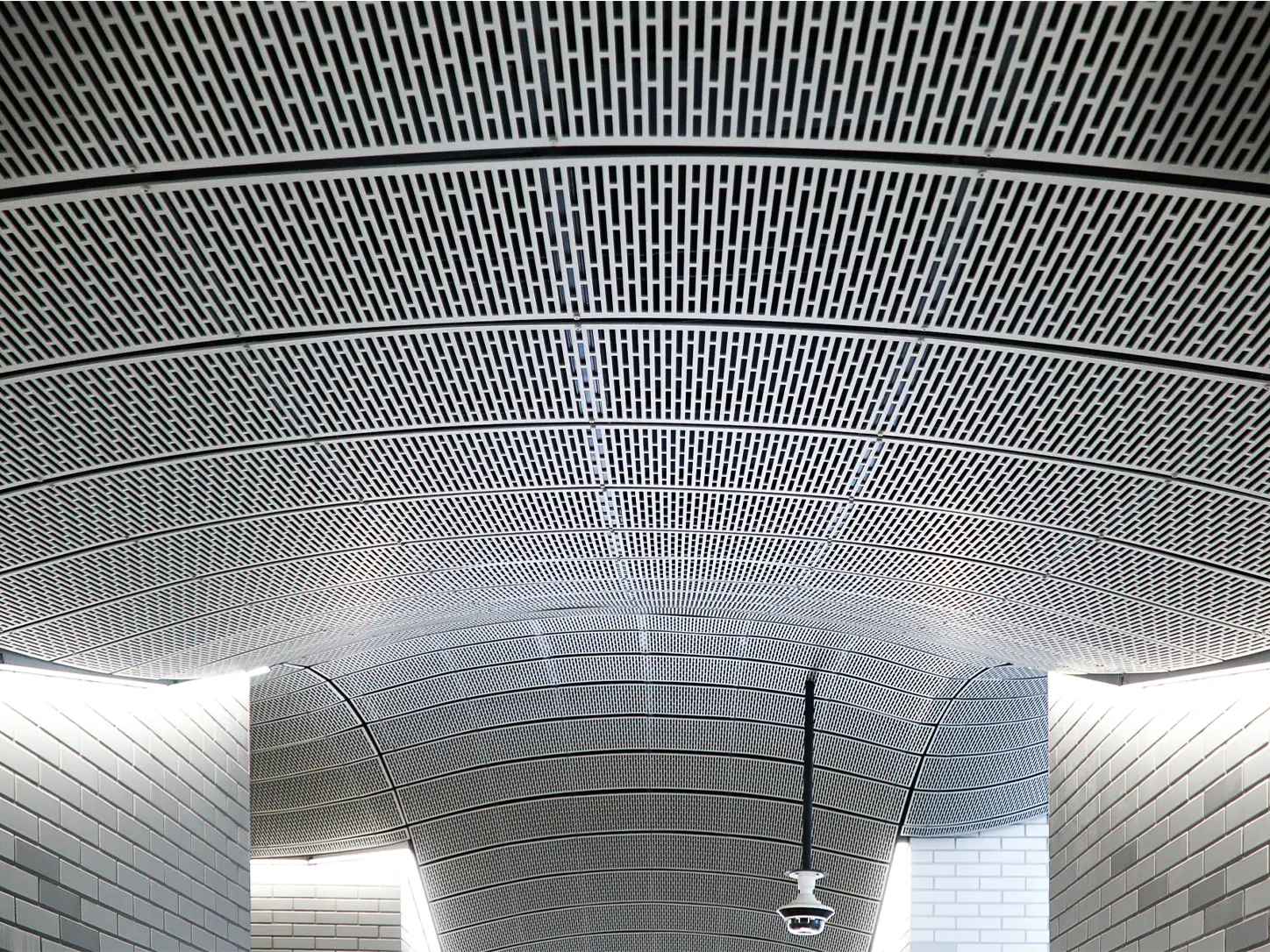
Longer or larger holes suit acoustic applications or uses requiring increased transparency. Slotted perforated metal panels, when backed with acoustic insulation, effectively absorb sound across various frequency ranges. The elongated slots provide a larger open area for sound waves to enter the absorption material, improving acoustic efficiency.
Industrial Noise Enclosures
In manufacturing facilities, slotted perforated metal is used for noise enclosures around machinery and equipment. The combination of structural strength and acoustic performance makes slotted panels ideal for reducing workplace noise exposure while maintaining ventilation.
Architectural Sound Control
In architectural applications, slotted perforated metal serves both aesthetic and acoustic functions. The panels are used in auditoriums, conference rooms, and open-plan offices to control reverberation and improve speech intelligibility. The modern appearance of slotted panels adds visual interest while providing functional sound absorption.
Sound-Insulated Partitions
Slotted perforated metal is used in sound/thermal insulation partitions. The panels allow for effective sound dampening while maintaining a lightweight, durable structure suitable for interior and exterior applications.
How to Select Slot Size and Spacing
Choosing the right specifications for slotted perforated metal requires careful consideration of your application requirements.
Slot Width and Length
The slot width determines what size particles can pass through, while the slot length affects the overall open area and directional flow characteristics. Common slot widths range from 1.8 mm to 25 mm, with lengths varying based on application requirements. For sorting elongated particles, the slot length should be oriented to match the particle’s direction of flow.
Pitch (Center-to-Center Spacing)
The pitch is the distance from the center of one slot to the center of the adjacent slot. Together with the slot dimensions, the pitch determines the open area percentage. Smaller pitches mean more slots per square inch and higher open area, but less material remains between slots, reducing strength. Typical pitch ranges from 3 mm to 34 mm.
Sheet Thickness
The sheet thickness affects strength, durability, and the minimum slot width achievable. As a general rule, the slot width should be at least equal to the sheet thickness for mechanical punching. Typical thicknesses range from 0.4 mm to 6.0 mm. Thicker sheets provide more durability but are heavier and more expensive.
Open Area Percentage
The open area is the percentage of the sheet surface occupied by slots. For slotted perforated metal, typical open areas range from 23% to 49%, with specialized configurations reaching higher percentages. Higher open areas allow more airflow and material passage but reduce structural strength. Choose the open area based on your flow requirements and strength needs.
Pattern and Orientation
Select the pattern that best suits your application:
- Straight rowsfor predictable airflow and controlled separation.
- Staggered rowsfor balanced open areas and enhanced structural stability.
- Herringbone or chessboardfor specialized sorting or decorative purposes.
- Slot orientation: Parallel to flow for material passage; perpendicular for deflection.
Material Selection
Choose the material based on your environment:
- Stainless steel (304/316): Corrosion resistance, hygiene, food processing
- Aluminum: Lightweight, decorative, corrosion-resistant
- Carbon steel: Economical, high strength, indoor use
- Galvanized steel: Moderate corrosion resistance, outdoor use
- Copper/Brass: Decorative, antimicrobial, conductive
Conclusion
Slotted perforated metal is a versatile and highly functional material that excels in applications requiring directional flow, high open area, and efficient material sorting. From grain processing and industrial screening to architectural design and sound dampening, the slotted hole sheet offers unique advantages that round or square holes cannot match. The ability to control slot orientation, choose from multiple patterns, and select the right slot size and spacing allows engineers and designers to optimize performance for virtually any application. By understanding the key features and selection criteria, you can confidently specify the right slotted perforated metal for your project.
